Author: Barry Parham

  • To You vs. Through You

    We all experience life’s ups and downs. But have you ever stopped to consider the fundamental difference in how you frame those experiences? It’s the difference between feeling like a victim of circumstance (things happening to you) and feeling like an active agent (things happening through you). This shift in perspective is the cornerstone of emotional maturity.


    The “Happening To Me” Mindset: The Victim’s Tale

    When you believe things are primarily happening to you, you place the control and the responsibility for your feelings and outcomes outside of yourself. This is the mindset of emotional immaturity.

    FocusTraitOutcome
    ExternalBlame, complaint, helplessnessResentment, stagnation, chronic dissatisfaction
    ControlZeroPowerlessness

    Examples of Emotional Immaturity

    Here are examples of how the “happening to me” mindset manifests as immature or boastful behavior:

    • Blaming/Complaining: “My team messed up the presentation, so I got chewed out by the boss. It’s totally their fault my review is bad.” (Externalizing failure and avoiding personal responsibility.)
    • Boastfulness/Ego-driven Success: “I landed that huge client because I’m the only one here with the guts and talent to do it. The rest of the department is useless.” (Taking all credit, inflating one’s ego, and dismissing the contributions or efforts of others.)
    • Self-Pity: “Why does this always happen to me? I can never catch a break! Everyone else has it so easy.” (Wallowing in helplessness and ignoring proactive steps.)

    The “Happening Through Me” Mindset: The Agent’s Journey

    The shift to “happening through me” is the essence of emotional maturity. It acknowledges that while you can’t control every external event, you can control your response, your effort, and your attitude. You become the channel, not the puppet.

    FocusTraitOutcome
    InternalResponsibility, choice, adaptabilityGrowth, empowerment, authentic satisfaction
    ControlInternal response and effortAgency

    Examples of Emotional Maturity

    This mature perspective transforms how you handle both setbacks and success:

    1. Handling Setbacks (Things you would normally see as ‘bad’):

    • The Mature Response: “The client rejected our proposal. While I’m disappointed, I need to take a step back, analyze what I could have done better in the pitch, and then use that insight to improve the next one.”
      • Why it’s mature: It accepts the reality of the failure, focuses on personal accountability and learning (the growth happening through you), rather than blaming external factors.

    2. Handling Success (Things you would normally want to boast about):

    • The Mature Response: “We secured the contract! I’m genuinely proud of the final result, and I’m grateful for the long hours the entire team put in. This success is a result of all of us working effectively together.”
      • Why it’s mature: It acknowledges the personal effort but contextualizes the achievement within the larger system, demonstrating humility and gratitude (the positive outcome flowing through the collective effort).

    3. Handling Personal Conflict (Things that hurt your feelings):

    • The Mature Response: “My friend cancelled our plans unexpectedly, and it made me feel unimportant. Instead of getting angry, I’m going to recognize my feeling, ask them if everything is okay, and respectfully communicate that I’d like more notice next time.”
      • Why it’s mature: It processes the emotion internally, assumes positive intent, and uses clear, respectful communication to set boundaries, making the interaction productive rather than explosive.

    The Path to the Mature Mindset

    Emotional maturity isn’t a destination; it’s a practice. Here are the keys to cultivating the “through me” mindset:

    1. Practice Response-Ability: When something happens, pause. Before reacting, ask yourself: “What is the most helpful way I can choose to respond right now?” The space between stimulus and response is your power.
    2. Separate Self-Worth from Outcomes: Your value is not determined by whether you succeed or fail. When you succeed, be grateful, not boastful. When you fail, be curious, not critical.
    3. Own Your Role (100/0 Principle): Take 100% responsibility for your actions, your reactions, and your effort, while accepting 0% of the credit for factors outside your control (like luck, other people’s actions, or external market forces).

    The shift from to me to through me is the ultimate act of empowerment. It turns every event, good or bad, into an opportunity for growth, learning, and self-mastery.

  • Cold Creek+barn dance=Life long love story

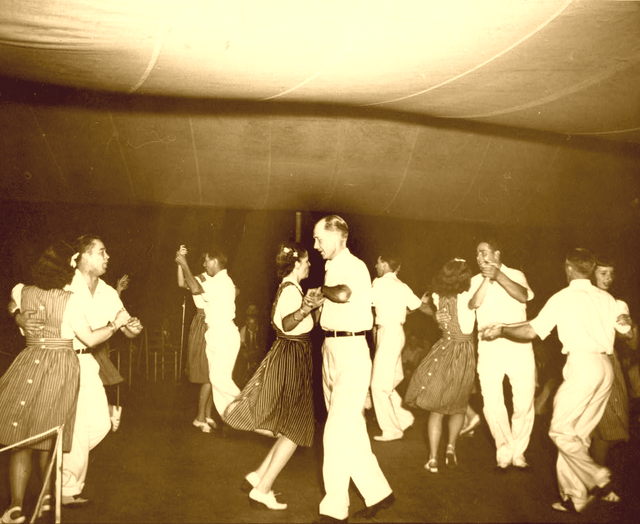
    The year was 1932, and a cold December wind sliced through the air in Catoosa, Oklahoma. Two young men, Loren and his friend, stood on the bank of a frigid creek. A dance beckoned on the other side, a special one for a young lady Loren’s friend had become acquainted with. He was determined to go, but the creek was an unwanted obstacle.

    “I’ll carry you across,” Loren offered, his words breaking the silence of them both contemplating their next steps. His friend climbed onto Loren’s shoulders. Slowly and carefully, they began their trek across the slippery, moss-covered rocks of the creek bed. The water swirled around Loren’s legs, its cold grasp seemed to grab onto and hold his feet.

    But halfway across, fate intervened. Loren’s boot found a slick spot, and with a yelp of surprise, the two friends tumbled into the cold water. They emerged from the water, dripping and shivering, their plan to arrive dry and tidy ruined. They looked at each other, their faces pale with cold, and then burst into laughter. What else was there to do? They continued their journey, squishing across the rest of the creek.

    They finally arrived at the dance, their clothes clinging to them like second skin. But their damp entrance was met not with ridicule, but with laughter and good cheer. In the midst of the celebration, Loren’s friend continued his connection with the birthday girl, laughing and dancing through the night. That night was the beginning of a lifelong commitment, a love story that would span decades.

    Loren’s friend, Warren, is my grandfather, and the birthday girl my grandmother. Their love was a testament to a commitment that endured a cold dunk in a creek and a friendship that was honored in the most special way. When their first son was born, he was given the name Loren, my dad.

  • Remember Hasu “Love”

    In an increasingly digitized world, where self-proclaimed realities often replace genuine human connection, our spirits can become hollow, distant from the enriching interaction of others. Love, social engagement, and the profound opportunity to share our individual narratives are often sacrificed at the altar of a 3×5 screen. This past week, a routine dental appointment with my son, initially scheduled for an hour, unexpectedly stretched into three. Lost in the digital maze of my phone, I was oblivious to the extraordinary person just a few feet away—a woman who would become the most remarkable individual I would encounter that week.

    Her name was Hasu, an elderly Indian woman who sat two seats over from me. She had entered with her 90-year-old husband and their devoted son. Hasu, at 88, carried her years with an astonishing grace; her frailty was masterfully concealed by an elegant posture and a perpetually hopeful smile. Like me, she was held captive in the waiting room while her husband underwent dental work. Later, she would tell me her name, “Hasu,” means “love”—a designation that perfectly encapsulated her vibrant zest for life and her innate desire for human interaction.

    Initially, Hasu was quiet, but a sudden sound from her phone prompted a gentle apology. I quickly assured her there was no need for such. This simple exchange became the key that unlocked a floodgate of conversation—a conversation that felt as nourishing as a wholesome meal placed before a starving child. She explained how her son often cautioned her against talking to strangers, yet she relished the banter, eager to share the rich tapestry of her life experiences.

    She began by recounting her early life in Kenya, painting vivid pictures of attending school amidst the natural beauty of the forest. Around the age of 10, her family moved to Nairobi. The schooling she received in the forest had been subpar; good teachers were a rarity, leading to a less desirable and comprehensive education. Upon arriving in Nairobi, she faced the daunting task of catching up, even having to repeat a grade to grasp the academic concepts that had eluded her before.

    Hasu married at 19, a union that reflected the prevailing culture and customs of her upbringing. Her family home had been a vibrant sanctuary, filled with the joyful noise of laughter and merriment. However, once married, she moved in with her husband’s family, and her father-in-law proved to be exceptionally strict, allowing for far fewer “shenanigans” than Hasu was accustomed to. She transitioned swiftly from the carefree existence of a daughter to the demanding role of a wife, navigating the myriad facets of her new responsibilities without the full understanding of the intricate tasks that lay before her.

    It was evident that a cap had been placed on what I could perceive as a truly vibrant soul—a soul yearning to share life through words and laughter, constantly seeking moments like this one, where she could share her story, compare life experiences, and offer encouragement to those around her. Now 88, she and her husband have moved in with their son, preparing to walk the final miles of their lives together. 

    This week, instead of staring at a screen, turn your attention to the people who matter most in your life. Engage in meaningful conversations with your loved ones. Listen attentively to their stories, share your own, and rediscover the joy of face-to-face interaction. These connections are the true essence of life, far more valuable than any fleeting digital trend.

    And as you navigate these interactions, always remember the profound power of Love. By “Love,” I mean Hasu. Her wisdom, her compassion, and her unwavering belief in the good in humanity are beacons for us all. Let her spirit guide your interactions, fostering understanding, empathy, and genuine affection in every relationship. Let her memory be a constant reminder of the importance of human connection and the enduring strength of love.

  • Step one: Admitting you are powerless

    Depression can create addiction and with that I am adding information regarding addiction and steps you can take to combat it.

    For anyone beginning the journey of a 12-Step program, Step One is arguably the most crucial and, for many, the most challenging: “We admitted we were powerless over drugs, alcohol, porn, etc.—that our lives had become unmanageable.”

    At first glance, this step can feel like a devastating blow to our pride and our  desire for control. Powerless? Unmanageable? For a long time, we’ve likely been fighting tooth and nail to prove the opposite, convincing ourselves and others that we’ve got this. But in the context of addiction, this admission isn’t a sign of weakness; it’s the very bedrock upon which true recovery, and a deeper walk with God, can be built.

    What Does “Powerless” Truly Mean?

    From a Christian viewpoint, understanding powerlessness in Step One is not about being weak in character or lacking moral fiber. Instead, it’s a recognition of spiritual truth: we cannot overcome certain forces in our own strength.

    Think of it this way: our addiction, whatever it may be, has taken on a life of its own. It’s become a master, dictating our choices, overriding our best intentions, and ultimately leading us down a path of increasing despair. The Bible consistently reminds us of the limitations of human will when pitted against sin and destructive patterns. As Romans 7:18 says, “For I know that good itself does not dwell in me, that is, in my sinful nature. For I have the desire to do what is good, but I cannot carry it out.”

    This isn’t to say we are without responsibility for our actions, but rather that the grip of addiction is so profound that our human efforts alone are insufficient to break free. We may try to white-knuckle it, make promises, or set new rules, but time and again, we find ourselves back in the same destructive cycle. This repetitive failure, this undeniable inability to control the substance or behavior, is the core of “powerlessness.”

    A Reality Check

    When our lives become unmanageable, it might not always look like outright chaos. Some may lose everything – jobs, relationships, health. For others, “unmanageable” might manifest as a quiet erosion of peace, a constant battle with guilt and shame, or a subtle yet pervasive sense that something is deeply wrong, even if outward appearances are maintained.

    From a Christian perspective, unmanageability points to a life that has strayed from God’s intended design. When we are not living in alignment with His will, when an idol (like our addiction) has taken His rightful place, our lives will inevitably suffer. Proverbs 14:12 reminds us, “There is a way that appears to be right, but in the end, it leads to death.” The unmanageability we experience is a painful, yet often necessary, indicator that our “right way” has led us astray.

    Finding Strength in Surrender

    This is where the Christian point of view truly shines in Step One. Admitting powerlessness isn’t an invitation to despair; it’s an open door to God’s boundless power and grace.

    The moment we truly humble ourselves and admit we can’t do it on our own, we create space for God to work. This isn’t about God waiting for us to hit rock bottom, but rather about our willingness to receive His help when we finally acknowledge our need for it.

    Consider these powerful truths from Scripture:

    • James 4:10: “Humble yourselves before the Lord, and he will lift you up.” Humility is the gateway to elevation. Our surrender opens the way for God’s divine intervention.
    • 2 Corinthians 12:9: “But he said to me, ‘My grace is sufficient for you, for my power is made perfect in weakness.’ Therefore I will boast all the more gladly about my weaknesses, so that Christ’s power may rest on me.” God’s strength is magnified in our moments of greatest weakness. When we cease striving in our own might, His perfect power can flow through us.
    • Matthew 11:28-30: “Come to me, all you who are weary and burdened, and I will give you rest. Take my yoke upon you and learn from me, for I am gentle and humble in heart, and you will find rest for your souls. For my yoke is easy and my burden is light.” Jesus invites us to lay down our heavy burdens, including the burden of trying to control what we cannot.

    Step One is an act of profound faith. It’s saying, “God, I’ve tried everything in my own strength, and it hasn’t worked. I surrender. I admit I am powerless over this, and my life is unmanageable. I need You.”

    This admission is the cracking open of our spirit, allowing the light of Christ to enter and begin the miraculous work of healing and transformation. It’s the courageous first step out of self-reliance and into the liberating truth that with God, all things are possible. It’s the beginning of a journey not to newfound self-control, but to Christ-control, where His power becomes our strength.

    I admit that my depression led to the use of alcohol which only spiraled my depression more. What would you admit today that you are powerless to control?

  • Mountain Roots and City Moves

    I grew up on top of South Pittsburg mountain, in a home that was once the old schoolhouse. In fact, our road, Patton School Road, was named after it, turning off the main winding path up the mountain. Life back then just seemed simpler.

    My mind still flickers with memories of bottle rocket wars and Roman candle target practice. It was a true Gen X “trial by fire,” a type of childhood adventure almost unheard of today—and likely why warning labels are found nearly everywhere now! Our family history was a fascinating blend of handmade fishing lures, dachshunds, and yes, even moonshine. We were a tight-knit family: Granny, Uncle Sammy, Aunt Donna, Mom, Dad, my brother, and I. We relied on each other as our own small community to support, grow, and survive the best way we knew how. My Uncle Carl and cousins lived nearby too, though they were a bit older than me.

    My dad was a laborer by trade, working hard at one of the factories in Chattanooga, TN. He was a great example of a hard worker to everyone who knew him. I always remember him bringing a treat home from work at the end of the week, whether it was a sugary delight or some novelty he’d found. His thoughtfulness made the anticipation of his arrival that much greater. It wasn’t until much later in life that I truly understood the sacrifices and burdens my dad must have carried during those years.

    Then came 1984. He was laid off from his job, forcing us to pull up our country roots and embark on a new chapter in Atlanta. We moved into a small Winnebago—two adults, two children, and our dachshund, Sweet Pea, all squeezed into that tiny space for what felt like the coldest winter on record. I remember my 10th birthday quite vividly: receiving a bingo game and a store-bought cake. I dared not complain, because even then, I understood the immense challenges we were facing.

  • Reel-y Good Times

    Florida vacation St. George island

    Just got back from an incredible four-day escape to St. George Island, and let me tell you, it was exactly what the soul needed! After years of the corporate grind, these adventures are what I live for now, and this trip delivered in spades.

    The plan was simple: sun, sand, and plenty of fishing. What we got was even better. From the moment we crossed the bridge onto the island, that distinct “Forgotten Coast” charm enveloped us. The air was fresh, the pace was slow, and the Gulf stretched out, an inviting canvas of blue.

    And oh, the fishing! My trusty rod and reel were practically singing. Over the four days, whether casting from the shore, wading the flats in Apalachicola Bay, or even trying our luck off a local pier, the fish were biting like crazy. We lost count a few times, but conservatively, we reeled in a staggering 50 to 60 fish! Catfish, whiting, 2 stingrays, and 1 feisty lady fish – the variety was fantastic. There’s nothing quite like the thrill of a tug on the line, the fight, and the satisfying moment of bringing in a beautiful catch. Each fish felt like a little victory, a testament to the island’s abundant waters.

    But as much as I love the thrill of the catch, this trip was about so much more than just the numbers. It was about sharing those moments with the people who matter most. My family and friends were right there with me, enjoying every sun-drenched second. We laughed, we told stories, we navigated tangled lines (mine, mostly!), and we celebrated every nibble and every landed fish together.

    Beyond the fishing, St. George Island offered the perfect backdrop for pure relaxation and connection. We spent mornings strolling the pristine, uncrowded beaches, collecting shells and watching the dolphins play in the surf. Afternoons were for leisurely lunches, enjoying fresh seafood at local spots that truly capture the island’s laid-back vibe. Evenings were reserved for breathtaking sunsets over the Gulf, painting the sky in hues of orange and pink, followed by stargazing that reminded us just how vast and beautiful the world is beyond our daily routines.

    It’s these moments of shared joy, the simple pleasures, and the undeniable beauty of nature that truly define my new adventures. St. George Island, with its incredible fishing and family-friendly atmosphere, was a perfect reminder that leaving the corporate world was the best decision I ever made. The reels are still humming, but now, it’s a different kind of freedom they sing of.

    If you’re looking for a place to unplug, cast a line, and reconnect with loved ones, put St. George Island on your list. You won’t regret it. I’m already dreaming of my next visit!

  • God Winks

    What started as a simple stroll with my daughter, Hannah, along the Ivy Creek Greenway in Lawrenceville, GA, quickly unfolded into a day filled with those magical, unscripted moments Hannah refers to as “God Winks.” The air was crisp, the birds were singing, and the dappled sunlight filtered through the trees, painting shifting patterns on the path ahead.

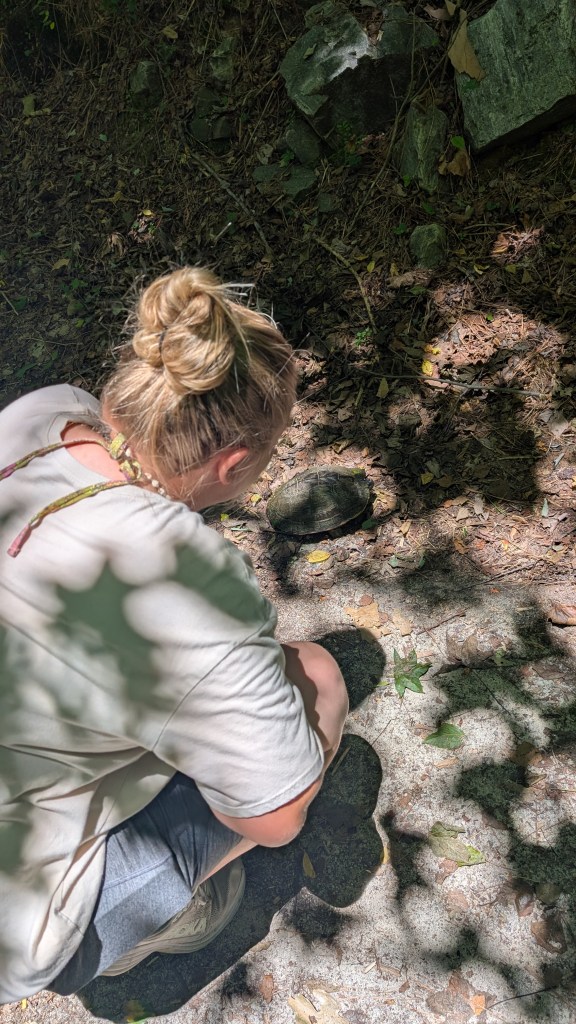
    As we meandered, taking in the peaceful surroundings, we came across a turtle contentedly sunbathing on the path, its ancient eyes seemingly observing the world with a calm wisdom. A little further on, a small caterpillar was making its determined, slow journey across our path, a tiny reminder to appreciate the unhurried pace of nature. Then, the real “God Wink” of the morning unfolded. Rounding a bend, we spotted three graceful deer, their coats a warm brown against the green foliage, quietly enjoying their day, completely unfazed by our presence. Hannah, with her keen eye and joyful spirit, whispered, “That’s a God Wink” and it truly felt like a special acknowledgment of our shared moment.

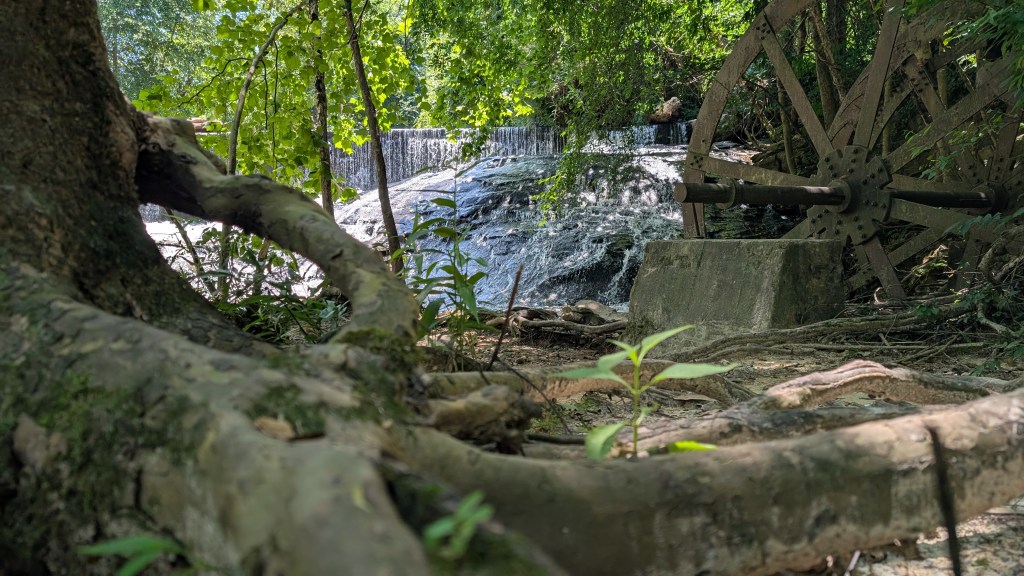
    Our walk also offered a breathtaking view of the Woodward Mill Dam, a tribute to both nature’s power and human ingenuity, its steady flow a soothing soundtrack to our morning.

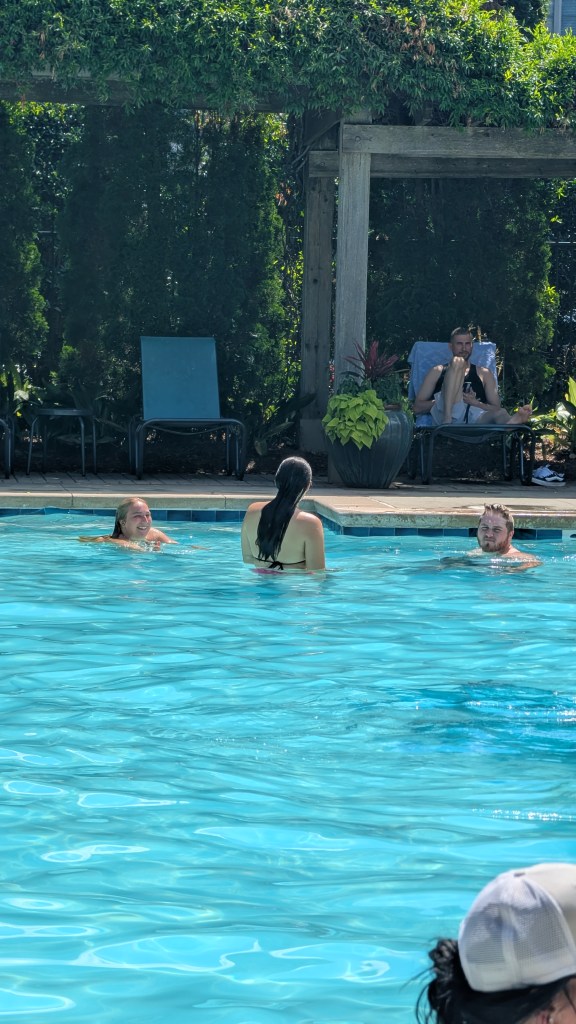
    After our invigorating hike, the warmth of the afternoon called for a different kind of refreshment. We headed to the pool, where the fun continued with my son, Dylan, his wonderful girlfriend, Madison, and of course, Hannah. The water was a welcome embrace, and the laughter and splashing filled the air as we enjoyed a perfect interlude of family time, punctuated by cannonballs and cheerful banter.

    As dusk began to settle, we made our way to the grand finale of our day: fireworks in Auburn, GA. Finding a great spot, we settled in as the sky transformed into a canvas of brilliant light and color. Each burst and crackle was a punctuation mark on a day already bursting with joy and connection. From the quiet “God Winks” of the morning to the explosive beauty of the evening, it was a reminder of how simple pleasures, shared with loved ones, create the most vibrant and lasting memories.

    What “God Winks” have you experienced lately?